Toilet, faucet, shower valve, disposal, appliance connections, and supply line replacements for West Tennessee homeowners.
Most plumbing service calls come down to a fixture that has failed, a fitting that needs replacing, or an upgrade that is overdue. At TennCo. Plumbing, our licensed plumbers handle the full range of residential service call work throughout West Tennessee, from a single stop valve to a complete fixture installation.
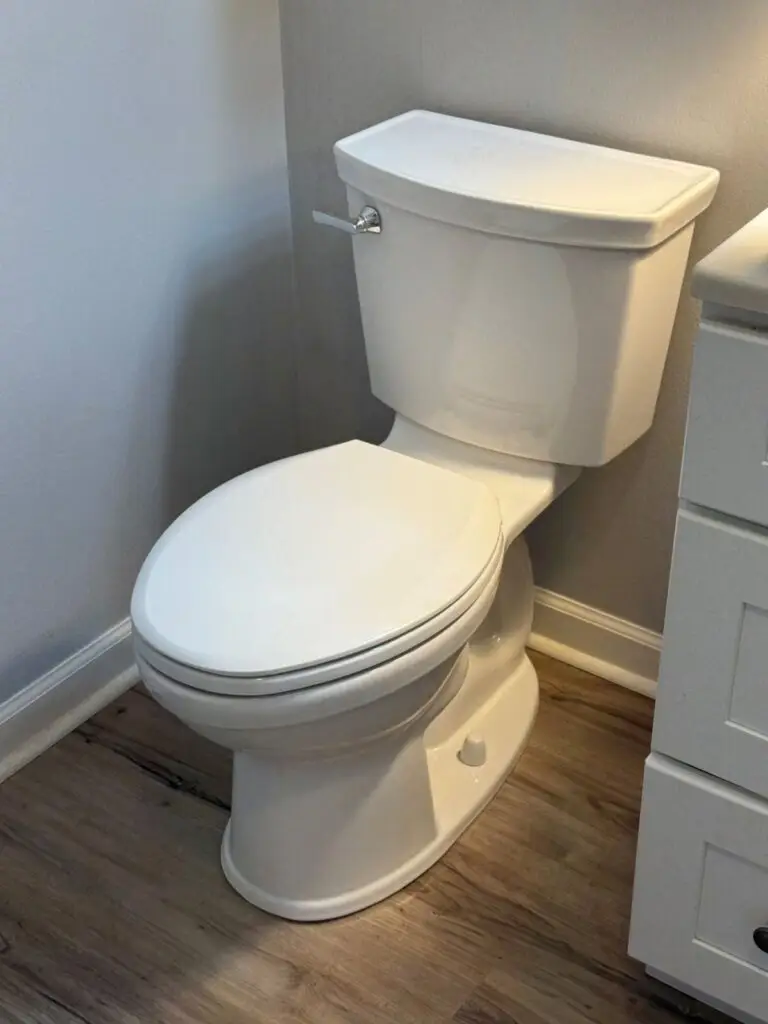
A toilet that runs continuously, leaks at the base, rocks on the floor, or flushes inconsistently needs attention. TennCo. Plumbing diagnoses the issue and recommends the right solution, whether that is a fill valve, flapper, or wax ring replacement, or a full toilet replacement when the fixture has reached the end of its useful life.
When replacement is the right call, we install American Standard and Kohler toilets and will install customer supplied fixtures as well. We remove the old unit, inspect the flange, and set the new toilet.
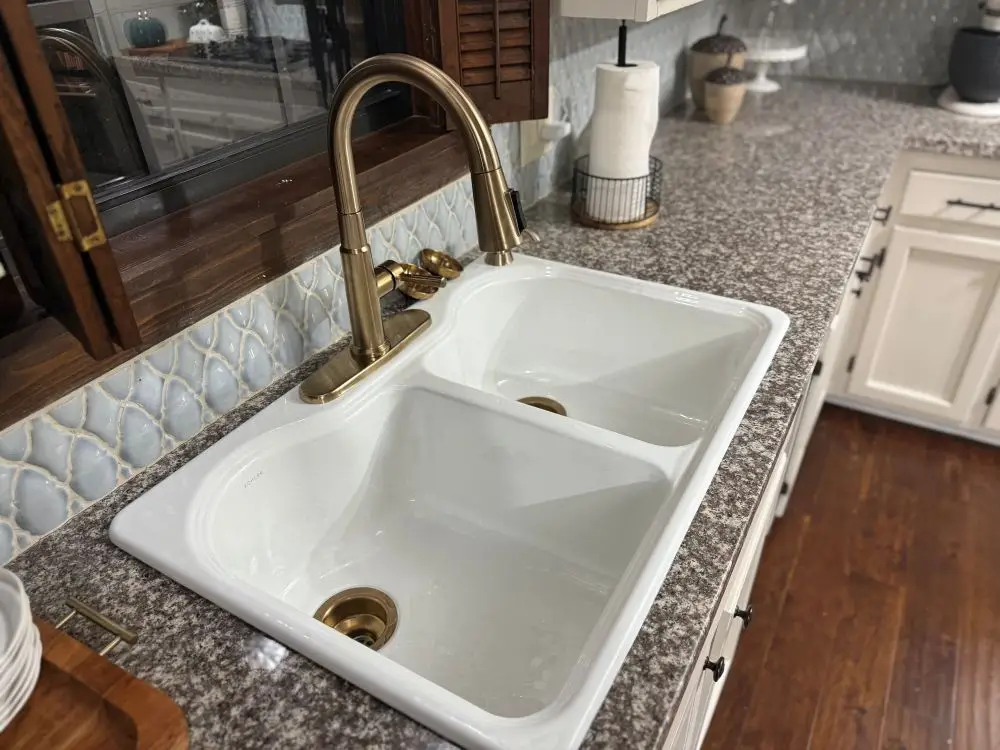
TennCo. Plumbing installs kitchen and bathroom faucets throughout West Tennessee. We work with Delta, Moen, and Kohler and will install customer supplied fixtures regardless of brand. Whether you are upgrading an existing faucet or replacing one that has failed, we handle the full installation including supply line connections and shutoff valve inspection.
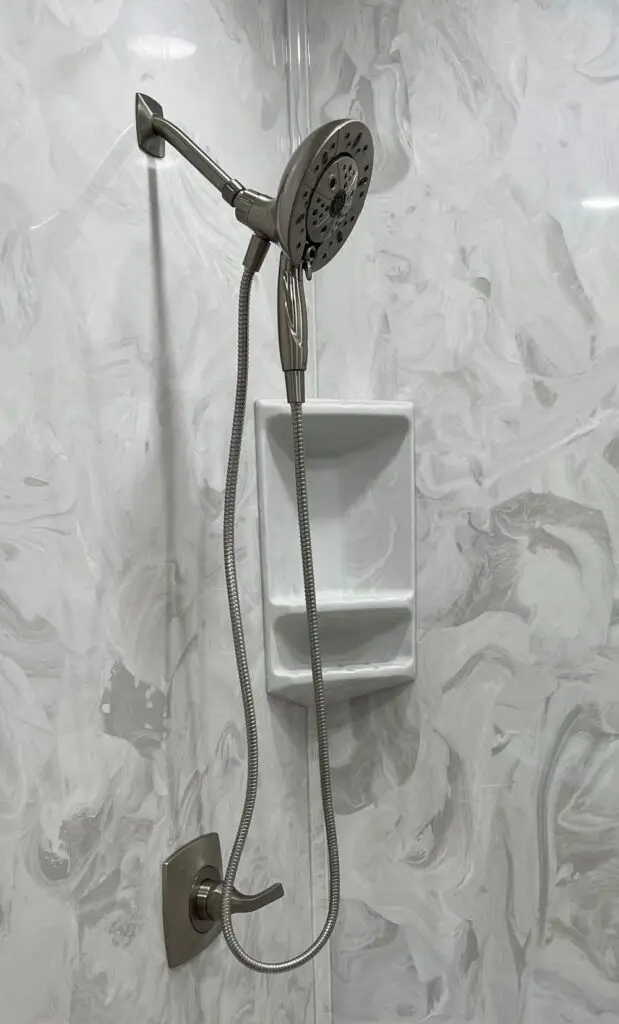
A shower that drips when off, fails to balance hot and cold water, or has lost pressure often points to a worn cartridge or a valve that needs replacement. TennCo. Plumbing handles both.
Cartridge replacement involves swapping the worn component and reinstalling the existing trim. A full valve replacement includes the valve body and complete trim package. In both cases the customer supplies the fixtures according to their preference for style and finish, and we handle the installation.
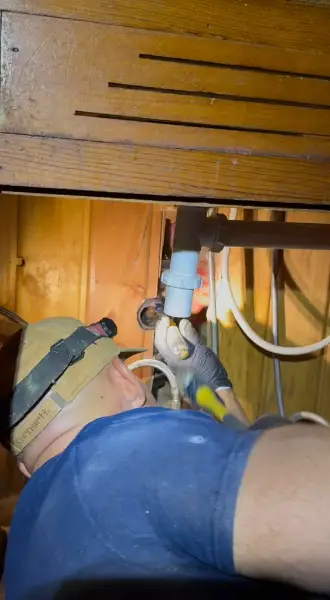
The small shutoff valves (stop valves) located behind your toilets and underneath your sinks serve as your primary control points to isolate water to individual fixtures. Over time, traditional multi-turn compression valves can corrode internally, causing them to freeze up or drip at the packing nut when you attempt to turn them off.
TennCo. Plumbing upgrades these older components with premium, quarter-turn solid brass angle stops and heavy-duty braided stainless steel supply lines. Replacing worn valves ensures you can quickly and easily shut off the water supply to your sinks, toilets, dishwashers, or washing machines whenever you need to perform maintenance or replace an appliance.
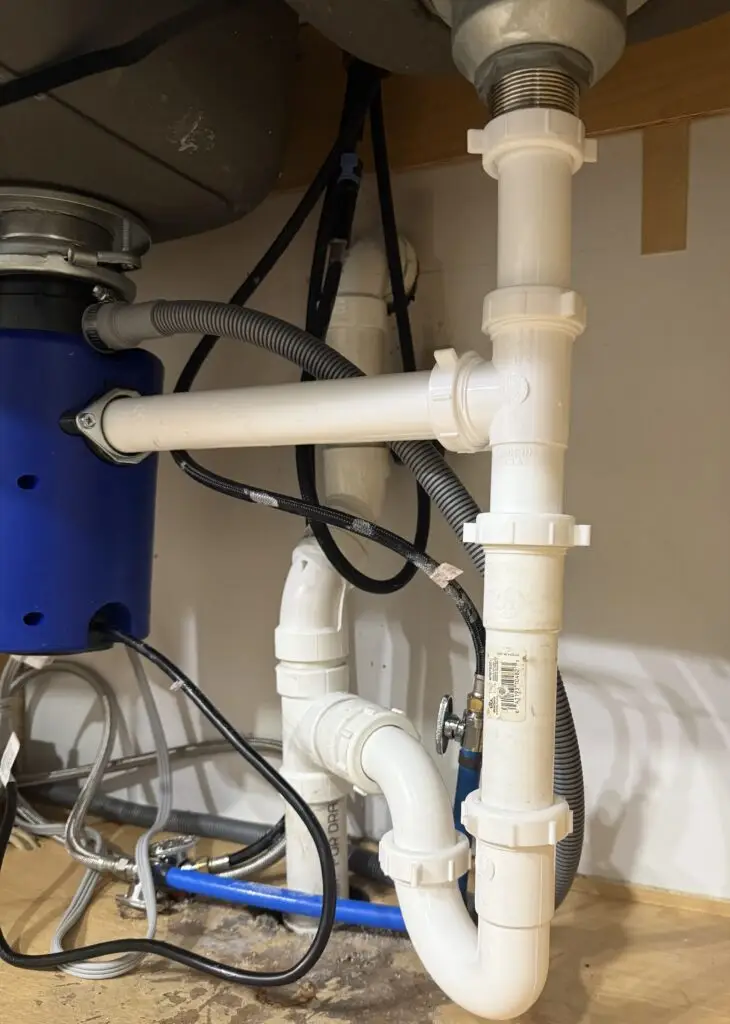
TennCo. Plumbing installs and replaces garbage disposals. Whether you are replacing a failed unit or installing a disposal for the first time, we handle the wiring connection, drain line, and mounting.
TennCo. Plumbing connects and services the plumbing for dishwashers. We tie the supply line into the hot water, connect the drain to the disposal or sink tailpiece, and install a proper high drain loop or air gap so wastewater cannot siphon back into the dishwasher. On new installs and replacements we check the shutoff, fittings, and connections for leaks before finishing. If an existing dishwasher is draining poorly or leaking at the connections, we troubleshoot the supply and drain side and correct it.
For laundry rooms, we replace worn, leaking, or seized washing machine shutoff valves so you can reliably isolate the water supply. If the surrounding housing is cracked or corroded, we can install or replace complete recessed wall laundry boxes to keep your hot and cold supply lines cleanly organized and accessible.
The thin tubular drainage piping beneath kitchen and bathroom sinks is regularly exposed to harsh household cleaners, food waste, and high water temperatures, which gradually degrade the material over time. We troubleshoot and repair common failure points like leaking slip-joints, sagging P-traps, and corroded brass or plastic tailpieces. Where standard lightweight plastic kits fail, we rebuild the system using heavy-gauge tubular drainage connected to a solid, solvent-welded Schedule 40 PVC trap adapter at the wall, ensuring a permanent, leak-free connection while keeping the assembly serviceable for future cleaning.
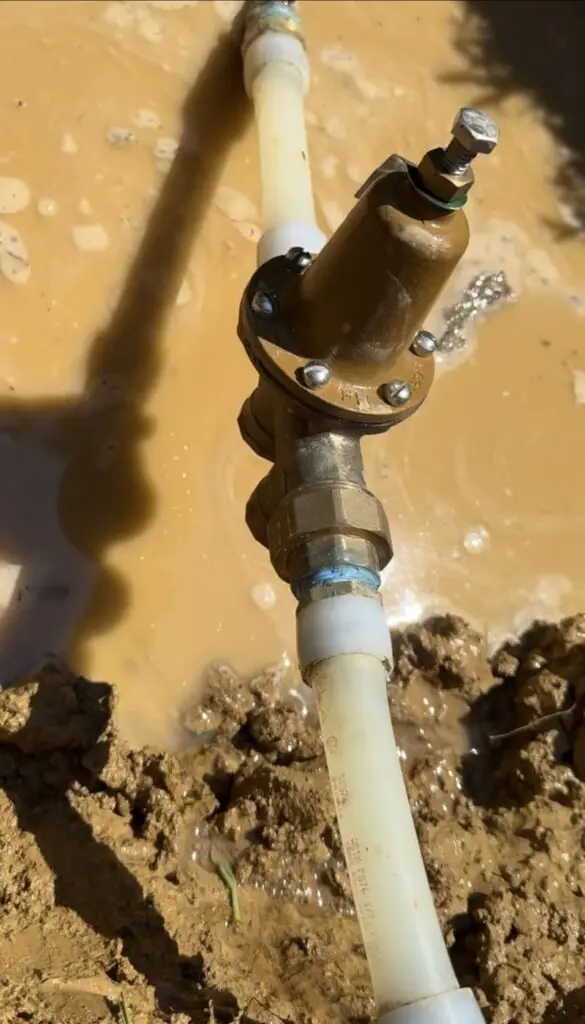
A pressure reducing valve controls the water pressure entering your home from the municipal supply. When a PRV begins to fail, water pressure may fluctuate, run higher than normal, or drop significantly throughout the house. High water pressure accelerates wear on fixtures, supply lines, and appliances throughout the home.
TennCo. Plumbing replaces failed or failing PRVs and sets the outgoing pressure to the appropriate range for your home’s plumbing system.
Pricing at TennCo. Plumbing is flat rate and quoted before work begins. The price you approve is the price you pay. Here is how the numbers work on a service call.
The service fee is $80 and covers the trip and the diagnosis of your problem. When you approve a repair, the $80 is included in the flat rate you are quoted, not added on top. A $225 fill valve replacement costs $225 total. If you decline the repair after hearing the quote, the $80 covers the diagnostic and that is all you pay.
$80
A single leak on a water line in the crawlspace is $350, flat rate. That covers shutting off water at the meter or the well, making the repair, waiting out glue joint cure times where the material requires it, and pressure testing the connection before we leave. A leak on a fitting, like a tee that joins three pieces of pipe, can run up to $550 because the repair replaces the fitting and reconnects every line it serves. These rates hold across pipe types: CPVC, PEX, PVC, copper, and gray poly.
$350-$550
If the problem genuinely is the flapper, the repair costs the $80 service fee plus $10 for the part. A fill valve replacement is $225 flat rate, and a full tank rebuild replacing both the fill valve and the flush valve is $350. We diagnose which one you actually need before quoting.
$90–$350
Straight answers to what homeowners actually ask
A water bill that jumps without a change in your habits usually means water is moving where you cannot see it. The most common causes are a running toilet, a leaking water heater relief valve, or a supply line leak in the crawlspace or between the meter and the house. A quick check: turn off every fixture and appliance that uses water, then look at your meter. If the dial is still moving, water is leaving the system and the line needs to be traced. If a repaired leak caused the spike, your utility may offer a one time bill adjustment.
Shut off everything that uses water and watch your meter for ten minutes. If the low flow indicator turns, you have a leak. Other signs include the sound of running water in a quiet house, a musty smell from the crawlspace, and a water heater that runs more often than it should. In the older homes we work on across Benton, Carroll, Henry, Henderson, and Decatur counties, crawlspaces are the most common hiding place.
A ceiling stain below a bathroom usually points to a failed toilet wax ring, a loose supply connection, or a tub drain leak rather than a burst pipe. Stop using the fixture directly above the stain and have it checked before running it again. A stain that keeps growing means the leak is active. TennCo. traces the leak to its source before anything gets opened up, which keeps the repair as small as the problem allows.
The internet will tell you it is the flapper. In our experience across West Tennessee homes, the flapper is hardly ever the reason. A toilet that keeps running usually has a fill valve that has failed open and will not shut off, or a faulty flush valve letting water slip into the bowl, which triggers the fill valve to top the tank off again and again. The quick test: put a few drops of food coloring in the tank and wait fifteen minutes without flushing. Color in the bowl means water is getting past the flush valve. A tank that audibly refills on its own points to the same problem, while a fill valve that simply never stops running is the other culprit.
A weak or incomplete flush usually comes from a low water level in the tank, mineral buildup in the rim jets, or a drain that is beginning to close up. If plunging fixes it briefly and the problem keeps coming back, the blockage sits deeper than the bowl. And if more than one fixture in the house drains slowly at the same time, the issue is the main line rather than the toilet.
When every fixture is weak, the cause sits where water enters the home: a failing pressure reducing valve, a main shutoff that is not fully open, mineral buildup in older galvanized lines, or a leak between the meter and the house. Homes at the far end of rural utility district lines can also see pressure sag when demand is high. A gauge threaded onto an outside spigot tells the story in seconds. Readings below 40 psi are worth a service visit. Pressure reducing valve replacement is covered under our standard services above.
One weak fixture is a local problem: a clogged aerator, a fouled cartridge, or a corroded supply line under the sink. Unscrew the aerator and rinse the screen first, since sediment from utility line work often collects there. If the aerator is clean and the flow is still weak, the cartridge or the supply stop is the likely cause, both service call repairs.
A sudden drop across the whole house points to an active leak, a pressure reducing valve that has failed, or utility work in your area. Check with a neighbor first. If their pressure is normal, check your meter with all water off. A moving dial means a leak, and a still dial with low pressure points to the valve. Either way the diagnosis is straightforward on site.
A service call covers diagnosis of the problem, a flat rate quote before any work starts, and the repair itself once you approve the price. Most common repairs are completed in the same visit with parts carried on the truck. Service calls are scheduled Monday through Saturday, 6am to 5pm, across Benton, Carroll, Henry, Henderson, and Decatur counties.
Some companies quote free estimates and recover the cost elsewhere. TennCo. charges an $80 service fee to come out and diagnose the problem, and the answer you get is a firm flat rate, not a guess. If you approve the repair, the $80 is part of the quoted price. If you decline, the $80 pays for the diagnosis and you owe nothing else.
Yes. For toilets, faucets, shower valves, and disposals, we install customer supplied fixtures. For toilets and faucets we also recommend Delta, Moen, Kohler, and American Standard if you would like guidance on selection.
Not necessarily. A continuously running toilet is most often a failed fill valve, flapper, or float adjustment, all of which are straightforward repairs. A failing flush valve can be the cause as well. If the toilet is older or has multiple issues, replacement may be the more practical solution, and we will give you an honest recommendation either way. It is worth addressing quickly. A running toilet is connected straight to your supply line, so it runs like a small tap left on around the clock. The EPA estimates a running toilet can waste roughly 200 gallons a day, and a flapper stuck wide open can push well past 1,000 gallons a day. The problem is often quiet, so the first sign for many homeowners is a water bill that climbs for no obvious reason. On a well, the pump also cycles more than it should, which adds wear and electricity cost on top of the wasted water.
Most residential plumbing systems are designed to operate between 40 and 80 PSI. Pressure that fluctuates, feels higher than normal, or drops noticeably throughout the house are common signs of a failing PRV. Pressure consistently above 80 PSI accelerates wear on fixtures, supply lines, and appliances and is a sign the valve needs attention. A licensed plumber can test your incoming pressure and confirm whether the valve needs replacement.
A constant drip almost always comes from a worn part inside the valve, not the spout or showerhead itself. On older two-handle faucets, it is usually a worn washer or seat that no longer seals fully. On single-handle faucets, it is typically a worn cartridge, the part that controls flow and temperature. In harder water, mineral buildup can also keep these parts from seating the way they should.
The fix depends on the valve. A washer or seat can often be replaced, while a single-handle valve usually calls for a new cartridge. In most cases the worn part can be replaced without pulling the whole valve. On older valves where the internal body itself is worn or corroded from years of use, replacing the in-wall valve is the better long-term fix, and we handle that as well. We identify the valve type, assess its condition, and make the repair that fits.
Yes. We connect the water supply and drain lines for new dishwasher and washing machine installations and replace laundry boxes when needed.
Some jobs are honestly yours: replacing a flapper, cleaning an aerator, plunging a single slow drain. Call a professional when the job involves supply lines under pressure, anything behind a wall or under the slab, the main drain line, gas lines, or a water heater. Those are the repairs where a small mistake turns into water damage or a safety problem. A licensed Journeyman Plumber, LLP #4680, handles every TennCo. service call, and if what you describe on the phone sounds like a fix you can do yourself, we will say so.
From a leaky faucet to a full repipe, our team handles residential plumbing across West Tennessee.
Upgrade your plumbing with our comprehensive repiping services for a more efficient and reliable system.
Quick, responsive solutions for repairs and fixture replacements across West Tennessee.
Drain line replacements restore proper flow by removing damaged piping and installing durable new lines that keep your plumbing system running smoothly.
Water heater install and repair services ensure you always have reliable hot water by replacing outdated units or fixing issues to restore efficient, dependable performance.
Ensure safe and efficient energy solutions with our expert installation and maintenance services.
Thorough cleaning services to remove clogs and maintain the longevity and efficiency of your drainage system.
Outdoor plumbing services keep your property functioning properly by installing, repairing, and maintaining water lines that run outside your home.
Sump pump and sewage ejector installation protects your home by efficiently removing groundwater and waste, preventing flooding and keeping your basement or lower level dry and safe.